The inspiration for our Bel Canto Summer Concert this year came about through my long wanting to perform Gustav Holst’s ‘Hymns to the Rig Veda’ which I’d sung as a teenager and found absolutely sumptuous and spine tinglingly thrilling!!! From this starting point, came the idea of developing a programme of music inspired by the East, which led to a whole host of other discoveries …
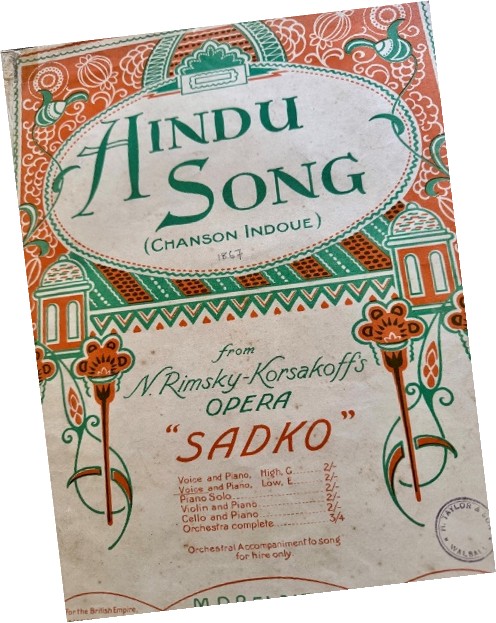
| I came across a beautiful old copy of Rimsky-Korsakov’s ‘Hindu Song’ (also known as the ‘Song of the Indian Guest’) in a second-hand music shop – probably the best-known aria from his opera, ‘Sadko’. Soon afterwards I visited another second-hand book shop and by sheer fluke, found an old choral copy of the same piece, scored for upper/female voices. However, the last page was torn off and missing! Although I couldn’t find another copy of the choral arrangement anywhere, it wasn’t difficult for me to recreate the ending from the original score of Sadko. The idea of putting these two pieces together as the centrepiece of a concert programme was too delicious to resist. |
At university, I was absolutely fascinated by Sergei Diaghilev, the Russian theatrical impresario and founder of the Ballets Russes, and spent some time studying his work and collaborations with great composers of the day, including Stravinsky, Debussy and Rimsky-Korsakov. Just the mention of his name, for me, conjures up images of the incredible Art Nouveau costume and set designs dreamt up by Léon Bakst, the poster art work of Jean Cocteau and the stylish, avant-garde entourage that coalesced around Diaghilev, which included Coco Chanel, Picasso and Matisse to name just a few. The excitement of the music and visual imagery of the productions staged by the Ballet Russes such as ‘Schéhérazade’, ‘Prince Igor’, ‘Les Sylphides’ and Stravinsky’s infamous ‘Firebird’, will be forever intertwined.
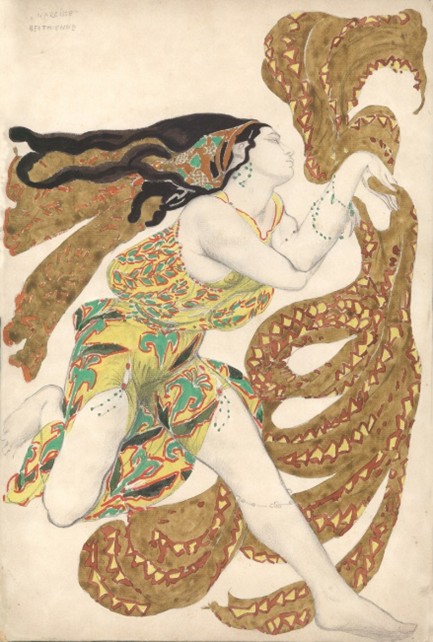
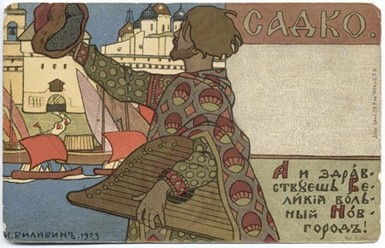
So, I started looking at Diaghilev’s operas and ballets for ideas and quickly fell upon the Choral Dance No. 17 or Polovtsian Dance from Borodin’s ‘Price Igor’. Listening to different recordings led me to the most amazing modern setting by our old friend, Bob Chilcott, written for British choral ensemble, ‘The Sixteen’.
I’m sure Diaghilev would have seized upon this instantly – as did we!
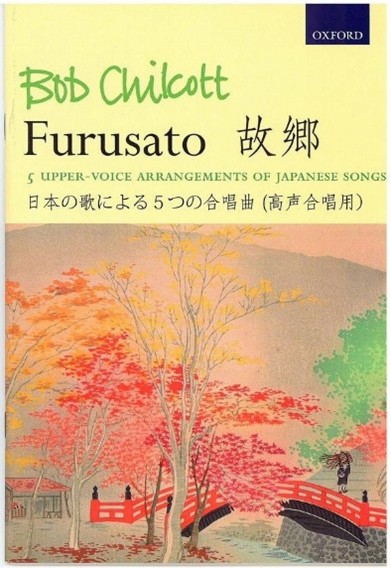
We were also delighted to be able to reprise one of Bob Chilcott’s other works, which Bel Canto previously sung in 2017, the ‘Furusato Suite’. Composed in 2011, it is dedicated to the victims of the devastating Japanese earthquake in March 2011.
It is a very sensitive and evocative setting of five Japanese folk songs, translated into English by the poet, Charles Bennett, so that we can really feel the poignancy of the words.
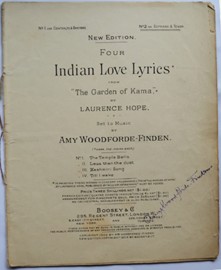
When Nicola Hunt agreed to join us as our guest soloist, this opened up yet more possibilities. The ‘Indian Love Lyrics’ by Amy Woodforde-Finden are not heard much these days, but they are so beautifully romantic. I am delighted that Nicki is going to perform all four within our programme.
I can’t help thinking of the 2004 film version of Agatha Christie’s ‘Death on the Nile’, when the character Salome Otterbourne is performing the ‘Indian Love Lyrics’ to assembled guests on the Nile cruise. It was a clever mechanism to hint at the impending dark and destructive consequences of jealousy and desperate love, at the heart of the plot. Amusingly, Poirot (played by David Suchet) implores her to sing something else saying “no more Love Lyrics, please!” In the 1930s, they must have been ‘sung to death’, but revisited today, they are pure escapism.
But what else would we love to sing … what other images of Eastern mystery and magic have been recreated in the musical repertoire?
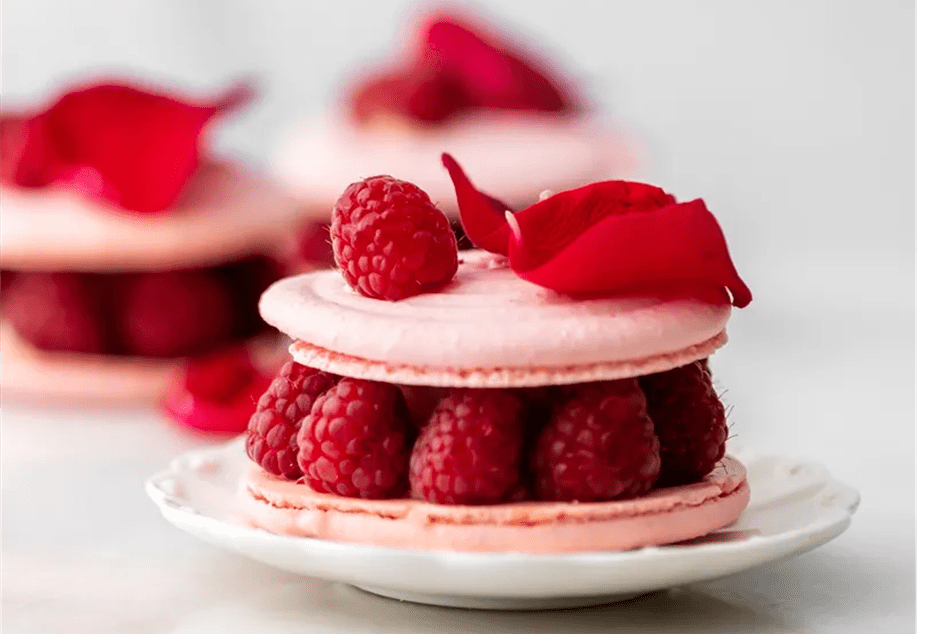
One of our final choices was Gabriel Fauré’s ‘Les Roses d’Ispahan’. Admittedly, I had to look up both ‘Ispahan’ and the roses it was famous for, and in so doing, I made the most wonderful discovery.
Macarons!!!
Possibly my very favourite dessert!

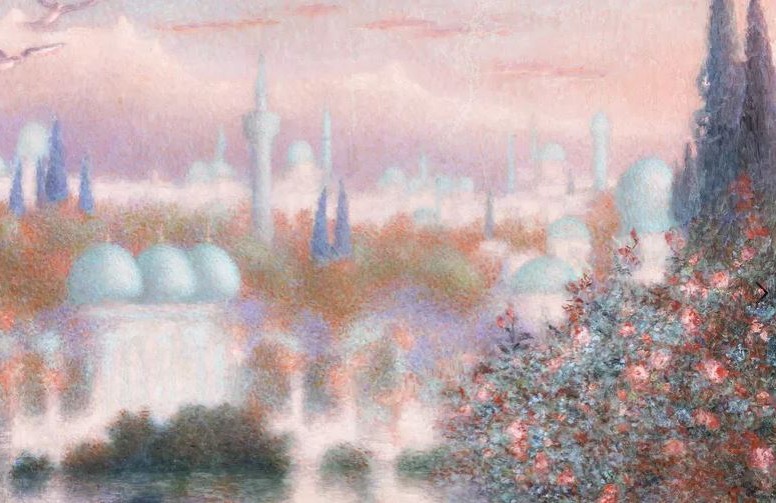
Ispahan itself, is a major city in central Iran, located about 440 km south of Tehran. In the 11th century it was the capital of Persia and is renowned for its rich history and stunning Persian architecture. It is also the name of a beautiful pink Damask old rose that originated from the area, and was introduced to Europe during the crusading 13th century.
Fauré composed his beautiful art song ‘Les Roses d’Ispahan’ in 1884, whilst living in Paris. It is the fourth and final piece of his Opus 39, settings of French poetry that explore themes of nature, love and melancholy.
Maybe hearing this piece was the inspiration for the Ispahan macaron, created by Pierre Hermé whilst working for Ladurée in the 1990s. The macaron combines rose, lychee, and raspberry flavours.
It is the most luscious piece of music and I so hope our audience loves it as we do!
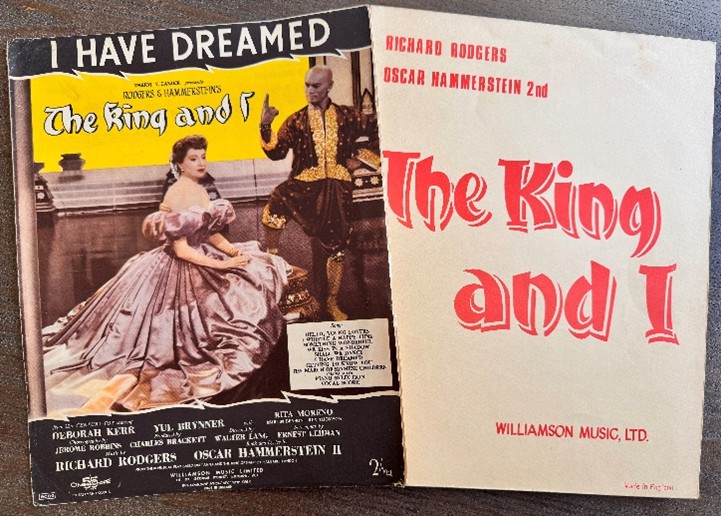
Turning to the great era of musicals, we couldn’t resist putting together a selection from Rodgers & Hammerstein’s unforgettable musical, ‘The King & I’.
Based on Margaret Landon’s semi-autobiographical book of 1944, ‘Anna and the King,’ the story became the much-loved film with Deborah Kerr and Yul Brenner and subsequently, in 1951 it premiered on Broadway as a stage musical.
There are some differences between the original musical score/stage musical and the film, and I could never understand why one of my favourite songs from the stage musical, was omitted from the film: ‘I Have Dreamed’. It will, however, be included in our concert, alongside numbers such as ‘Hello Young Lovers’, ‘We Kiss in the Shadows’ and of course, ‘Something Wonderful’.
And who, more lovely to sing ‘Something Wonderful’ as Anna, than Nicola Hunt!?
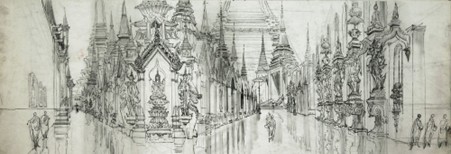
I was just sad not to find a choral arrangement of ‘The Entrance of the Shades’ from La Bayadère, as I could imagine Bel Canto singing this within our programme. Even without the visual feast of Marius Petipa’s choreography for by the Royal Ballet, in which 24 ballerinas (the shades), each execute a series of 39 arabesques as they descend a ramp and float onto the stage, Minkus’ music is wonderful to listen to.
It is playing on my mind to find an appropriate poem to create a choral arrangement for this, with gentle waves of sound repeated in sequence by each of the voice parts (mirroring the shades), and eventually resolving into the lilting waltz and eventual stillness.
But that is for another day!
Tickets for our ‘Something Wonderful’ concert are available at Baslow Village Shop & Post office, from Bel Canto members or feel free to email me at belcantobaslow@gmail.com
 belcantobaslow.uk
Leave a comment